

Blog
As music becomes more expressive, rhythms begin to mix long and short notes
within the same beat. One very common and exciting example of this is the dotted
quaver and semiquaver pattern. This rhythm gives music a sense of drive,
elegance, and forward motion.
What Is a Dotted Quaver and Semiquaver?
A dotted quaver and semiquaver is a rhythmic grouping made up of:
• A dotted quaver, followed by
• A semiquaver
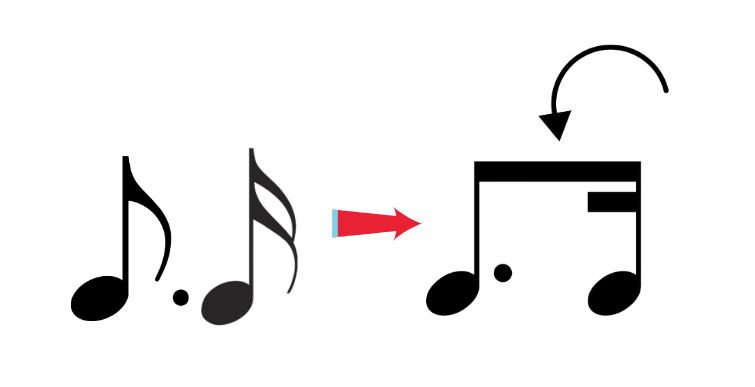
Together, they fill one full beat in simple time.
• UK (British) names: Dotted Quaver – Semiquaver
• US (American) names: Dotted Eighth Note – Sixteenth Note
How the Beat Is Divided
Here’s how the timing works in simple time signatures like 4/4, 3/4, and 2/4:
• A dotted quaver lasts for ¾ of a beat
• A semiquaver lasts for ¼ of a beat
• Together, they equal one complete beat
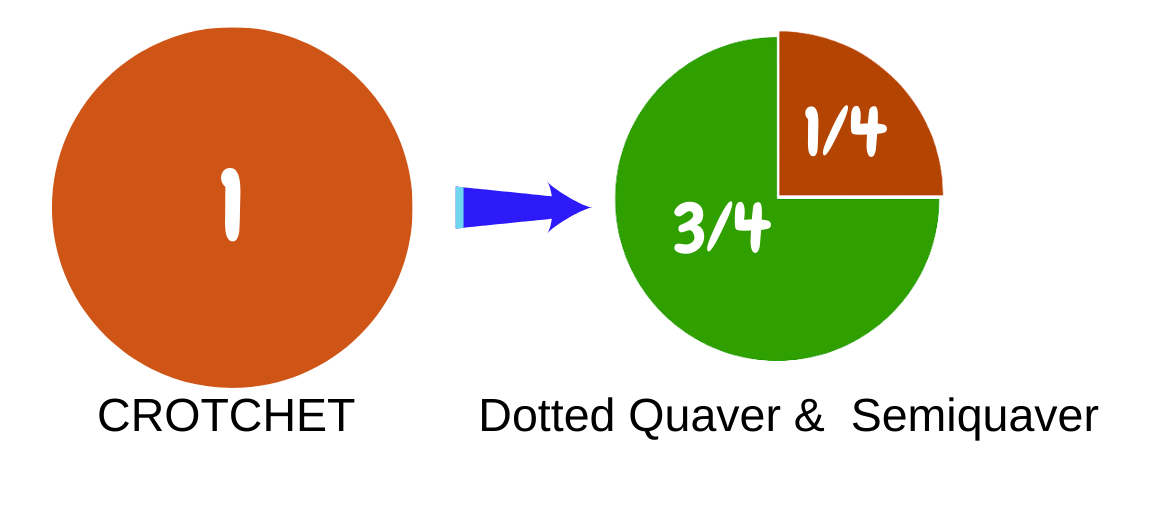
This creates a long–short rhythm that feels lively and intentional.
How It Looks on the Music Sheet
When written:
• The dotted quaver has a dot placed after its note head
• The semiquaver has two beams
• They are often beamed together, showing that they belong to the same
beat
Visually, this immediately tells the performer: hold the first note longer, then
move quickly to the next.
How Long Does It Last? (Tempo Explained)
At different speeds, the timing changes, but the relationship stays the same.
At 60 BPM:
• One crotchet = 1 second
• Dotted quaver = 0.75 seconds
• Semiquaver = 0.25 seconds
• Together = 1 full second
At 120 BPM:
• One crotchet = 0.5 seconds
• Dotted quaver = 0.375 seconds
• Semiquaver = 0.125 seconds
• Together = 0.5 seconds
No matter the tempo, the pattern always fits neatly into one beat.
How It Feels in Different Time Signatures
In Simple Time (4/4, 3/4, 2/4)
• Acts as one full beat
• Feels like a strong long–short “kick” or bounce
• Very clear and grounded
In Compound Time (6/8, 9/8, 12/8)
• Still possible, but feels syncopated
• Stands out against the usual three-part subdivision
• Adds rhythmic surprise and tension
A Simple Way to Think About It
Imagine taking a step and a quick tap:
• The step is the dotted quaver (long)
• The tap is the semiquaver (short)
Together, they complete one smooth movement—but with personality.
For a more detailed walkthrough, you can watch the full video tutorial below, where each rhythm pattern is explained and practiced step by step.
The next step is simple—practice.
To help you get comfortable with counting and timing, we’ve created a free rhythm exercise PDF you can practice at your own pace. The exercises are short, clear, and beginner-friendly.
Download the free Rhythm Exercise PDF below and start practicing.
 Beginner Scores