

Blog
Some rhythms add spice and forward momentum by combining short and long
notes in unexpected ways. One popular pattern that does this is the semiquaver
followed by a dotted quaver. It creates a rhythm that feels quick at the start
and stretched at the end, giving the beat a playful yet expressive character.
What Is a Semiquaver and Dotted Quaver?
This rhythmic grouping is made up of:
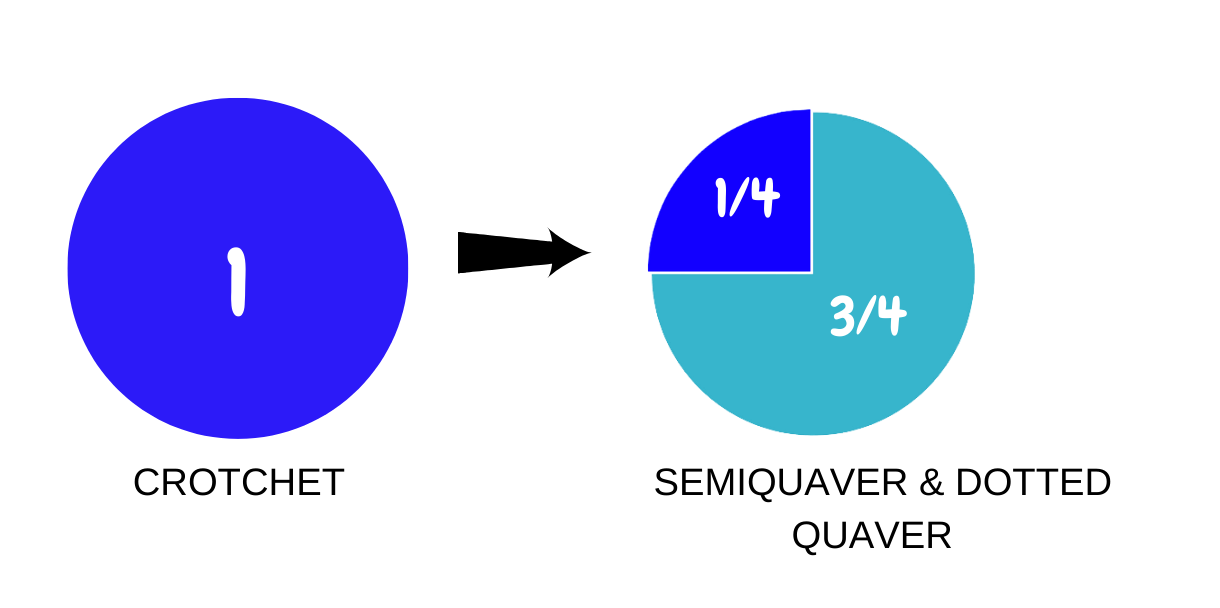
• One semiquaver (¼ of a beat)
• One dotted quaver (¾ of a beat)
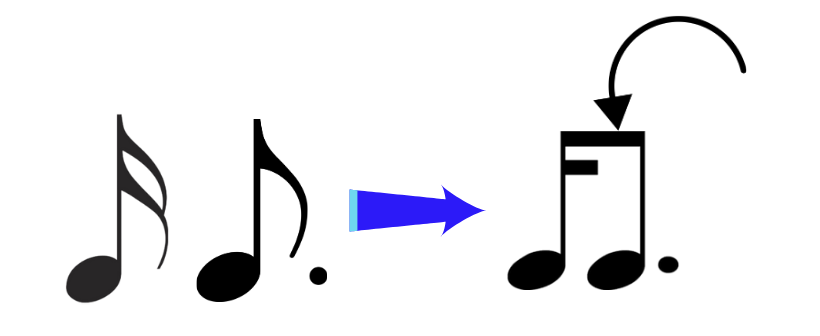
Together, they fill one full beat in simple time.
• UK (British) name: Semiquaver – Dotted Quaver
• US (American) name: Sixteenth Note – Dotted Eighth Note
In other words:
0.25 + 0.75 = 1 complete beat
How It Looks on the Music Sheet
• The semiquaver comes first, usually with two flags
• The dotted quaver follows, with a dot after its note head
• Beaming is often used to visually connect them, showing they belong to the
same beat
This helps musicians quickly recognize the rhythm and play it accurately.
How Long Does It Last? (Tempo Explained)
At 60 BPM (one crotchet = 1 second):
• Semiquaver = 0.25 sec
• Dotted quaver = 0.75 sec
• Total = 1 second
At 120 BPM (one crotchet = 0.5 sec):
• Semiquaver = 0.125 sec
• Dotted quaver = 0.375 sec
• Total = 0.5 seconds
The beat stays consistent, but the long–short contrast creates a natural push in
the rhythm.
How It Feels When Played
This rhythm gives a quick–slow feel:
• The semiquaver acts as a spark or lead-in
• The dotted quaver stretches the beat, adding tension, expression, and
flow
It is often counted as “short–long” and is perfect for creating rhythmic interest.
In Simple Time (4/4, 3/4, 2/4)
• Fits neatly into one beat
• Adds forward movement and variety
• Breaks up monotony of straight notes
In Compound Time (6/8, 9/8, 12/8)
• Can appear across beats for syncopation
• Feels less symmetrical against the natural triple subdivision, giving an off
kilter but expressive effect
A Simple Way to Think About It
Imagine a quick tap followed by a long step:
• Tap = semiquaver
• Step = dotted quaver
It’s one beat, but with personality—a little spark leading into a stretch.
For a more detailed walkthrough, you can watch the full video tutorial below, where each rhythm pattern is explained and practiced step by step.
The next step is simple—practice.
To help you get comfortable with counting and timing, we’ve created a free rhythm exercise PDF you can practice at your own pace. The exercises are short, clear, and beginner-friendly.
Download the free Rhythm Exercise PDF below and start practicing.
 Beginner Scores