
RHYTHM MADE FUN. MUSIC MADE SIMPLE.
Fruit Rhythm Course Part 2
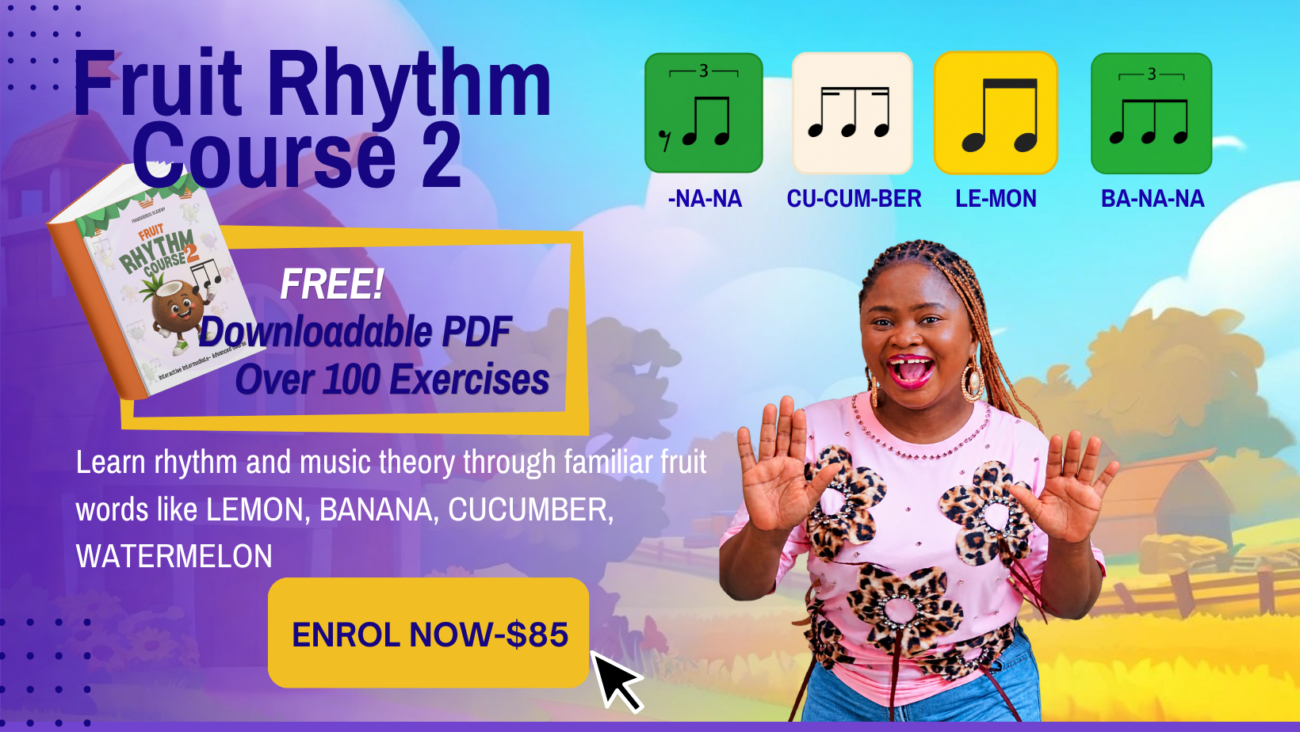
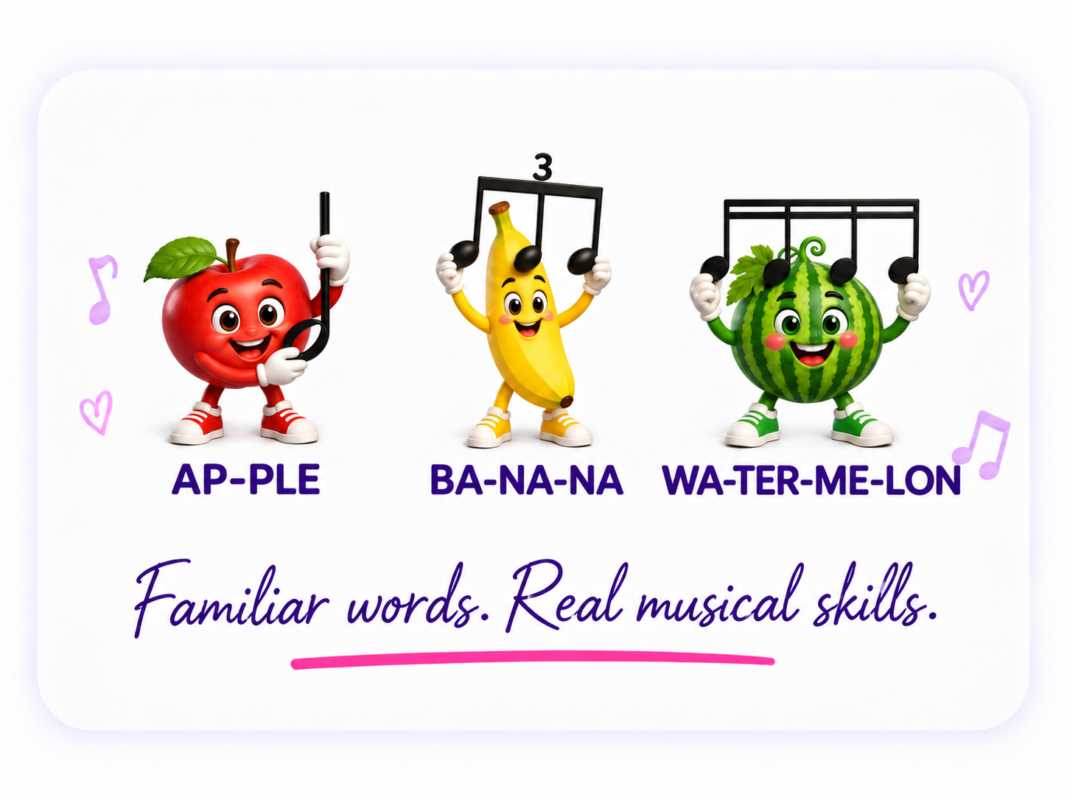
Learn rhythm and music theory through familiar fruit words – like APPLE, GO and WATERMELON – and build real musical skills in a fun, memorable way.
Free Downloadable PDF Included
Practice sheets and exercises to support the course.
- Instant Access
- Learn at Your Own Pace
- Lifetime Access
Video Course
On-demand access
1 Hr 30 Mins
Duration
Beginner & Intermediate
Level
Grades 1 – 10
Progressive lessons
Downloadable PDF
Exercises included
About the Course
The Fruit Rhythm Course at Pianogoddess Academy is a fun, practical, and progressive approach to learning rhythm and music theory. The course uses familiar fruit words as a simple way to help students understand note values, subdivisions, counting, and rhythmic patterns.
Instead of learning rhythm only through abstract musical symbols, students associate different rhythmic values with easy-to-remember fruit words such as “AP-PLE,” “GO,” and “WA-TER-ME-LON.” This makes rhythm more visual, memorable, and easier to practise.
The course is structured progressively from Grade 1 to Grade 10, allowing students to build their rhythmic knowledge step by step. Each grade introduces new concepts while reinforcing the skills learned in previous levels.
WATCH THE INTRODUCTION
See the Fruit Rhythm Method in Action
Watch this quick introduction from Pianogoddess and see how familiar fruit words help students understand, count and perform rhythm more naturally.
- Press Play to watch
What Students Will Learn
Build real rhythm skills step by step.
- Understand basic note values and their durations.
- Recognise and perform different rhythmic patterns.
- Connect written rhythms with spoken fruit words.
- Count and perform rhythms accurately
- Understand faster note subdivisions.
- Read increasingly complex rhythmic combinations.
- Work with different and more complex time signatures.
- Understand and perform dotted notes.
- Develop confidence with syncopated rhythms.
- Understand and perform triplets.
- Apply theoretical rhythm concepts practically.
Why This Course Works
A fun approach. Real results.

Simple & Memorable
Fruit words make complex rhythms easy to understand and remember.

Practical
Learn through real examples you can clap, say and play.

Progressive
Carefully structured from Grade 1 to 10.

Engaging
Keeps students motivated and excited about learning rhythm.

Skill-Focused
Skill-Focused
Who This Course Is For
- Beginners learning the foundations of rhythm.
- Piano students who want to improve their rhythm.
- Music students developing their music theory skills
- Instrumentalists who struggle with counting rhythms.
- Students preparing to read more advanced music.
- Teachers looking for a simple and engaging way to explain rhythm.
What Students Will Be Able To Do
More than just theory. Real musical confidence.
Read
rhythms accurately
Count
with confidence
Say
rhythms using fruit words
Hear
and recognise rhythms
Perform
rhythms on your instrument
Understand
how rhythms work in music
Course Progression: Grade 1–10
A clear path from simple to more advanced rhythms.

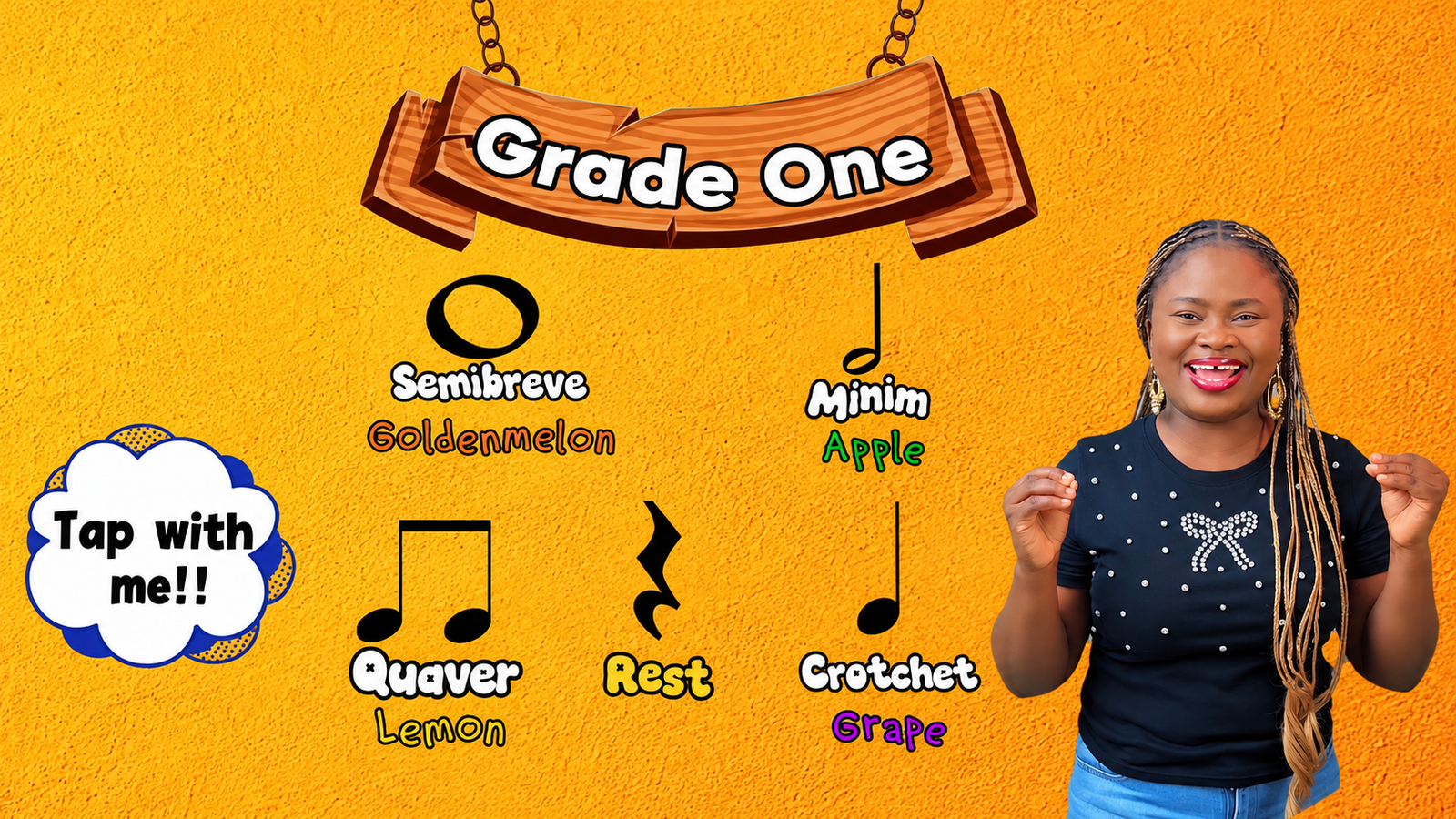
Grade 1 — Building the Foundation
Students are introduced to the basic principles of rhythm and note values. The focus is on developing an understanding of simple rhythmic patterns and learning how fruit words can represent different note values. The goal at this stage is to help beginners become comfortable with counting, reading, and performing basic rhythms.
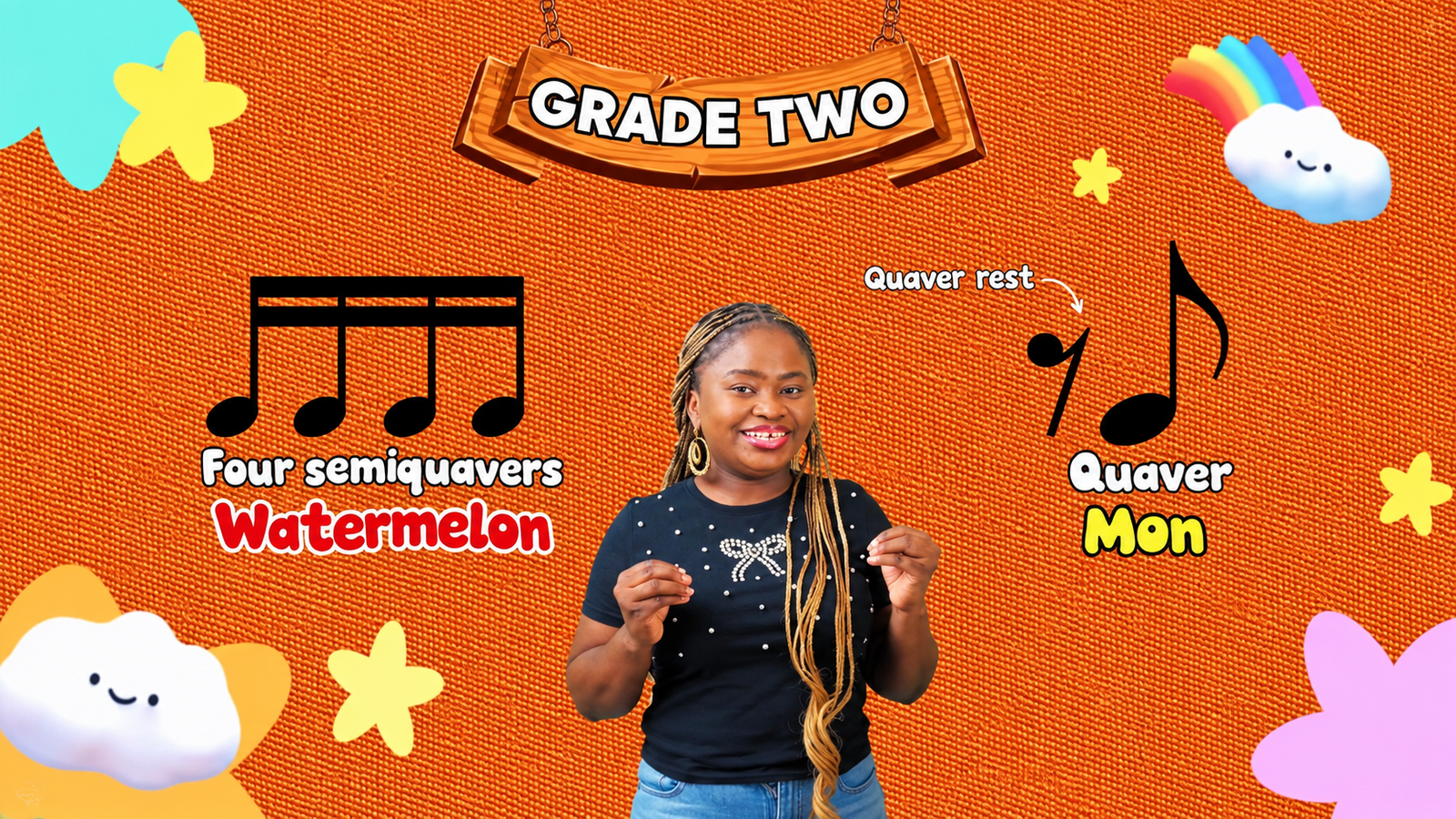
Grade 2 — Developing Rhythmic Understanding
Students build on their foundational knowledge by working with additional rhythmic combinations and becoming more confident in connecting written notation with the corresponding fruit-word patterns. The emphasis is on accuracy, consistency, and developing a stronger sense of timing.
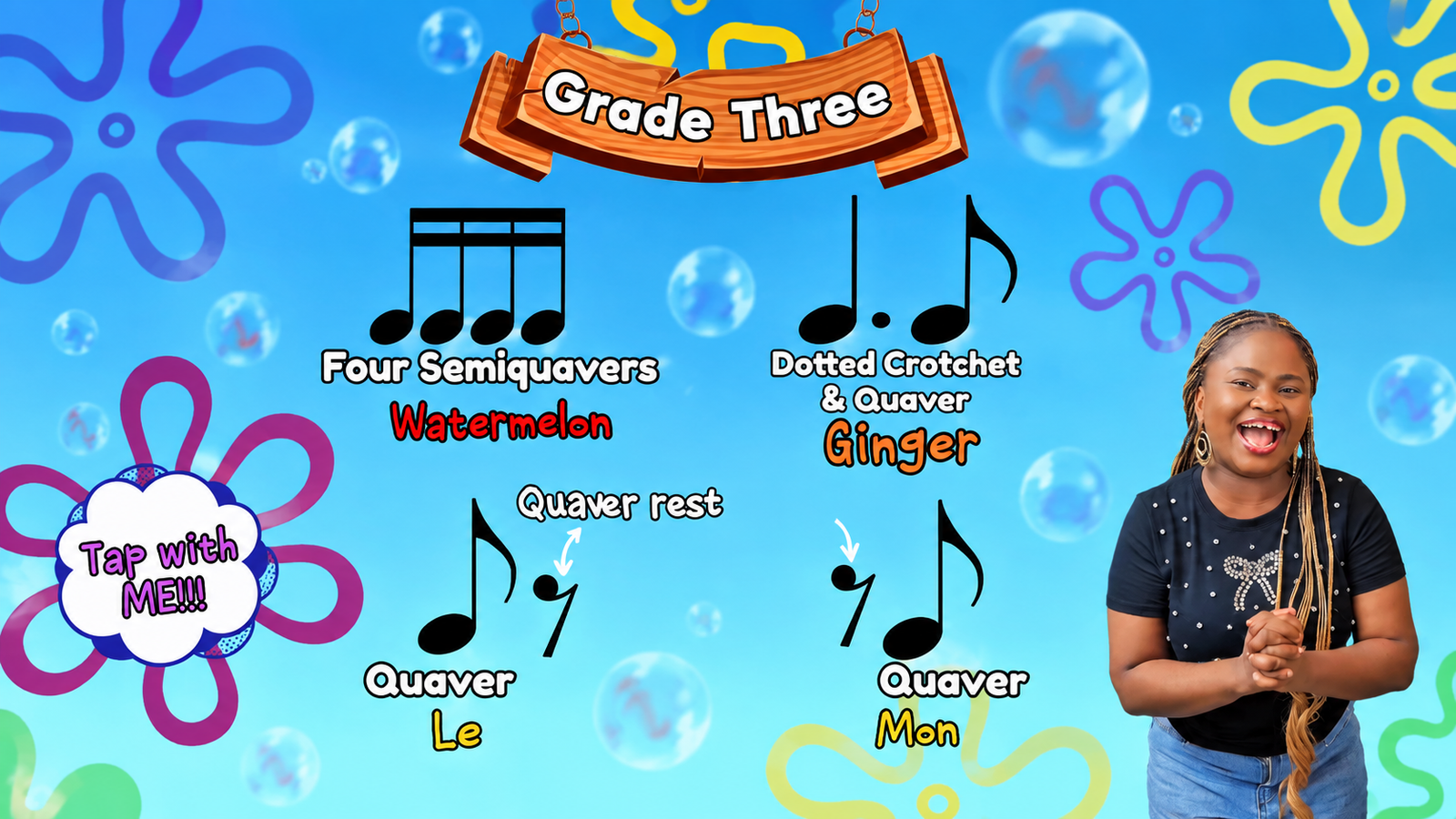
Grade 3 — Introducing More Rhythmic Variety
Students begin working with more varied rhythmic patterns and faster subdivisions. They develop greater control over counting and performing rhythms while continuing to use the fruit-based system as a memory aid.
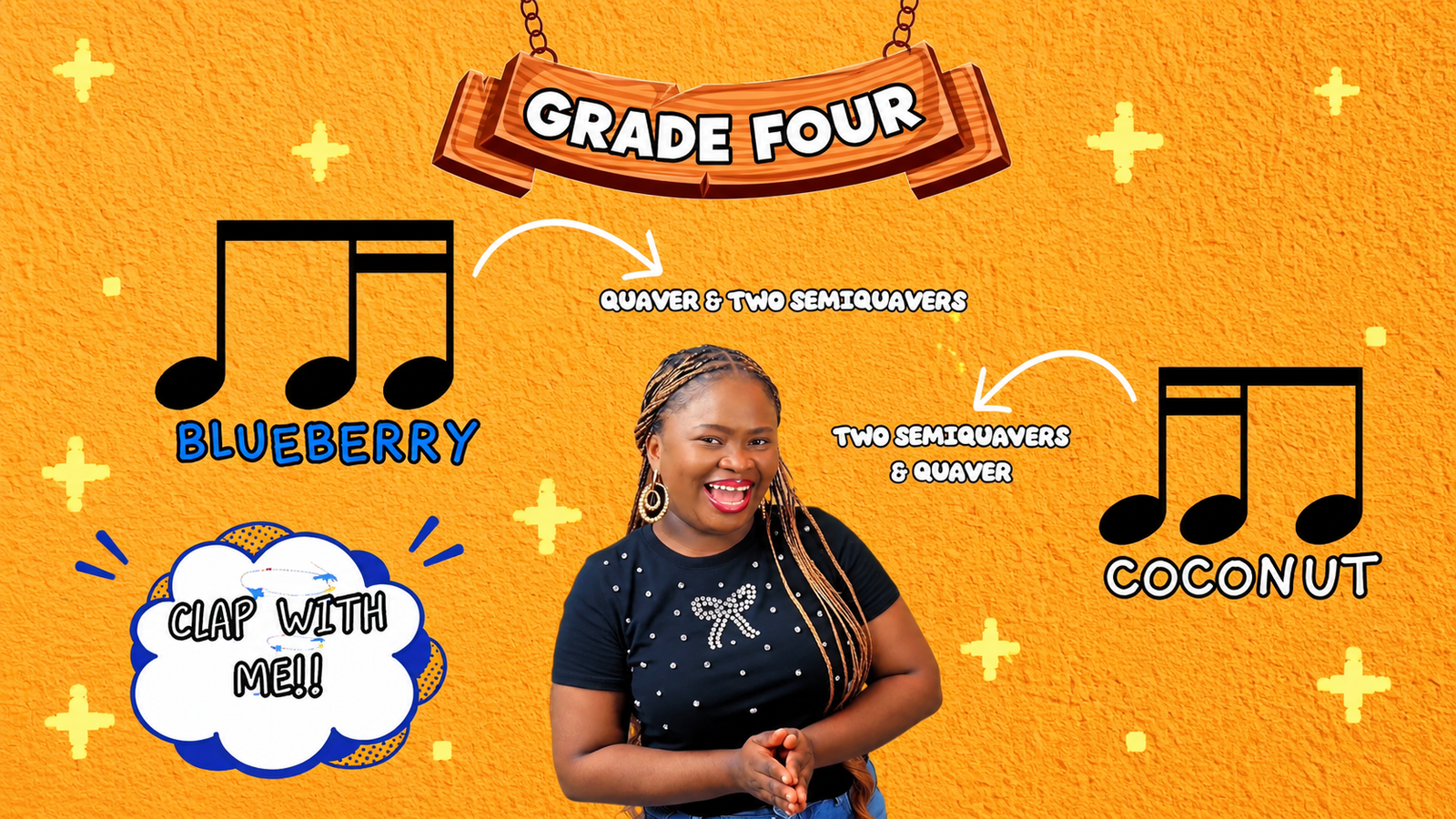
Grade 4 — Increasing Complexity
The rhythmic exercises become progressively more challenging. Students encounter more intricate combinations and develop the ability to maintain accurate timing while navigating increasingly detailed rhythmic patterns.
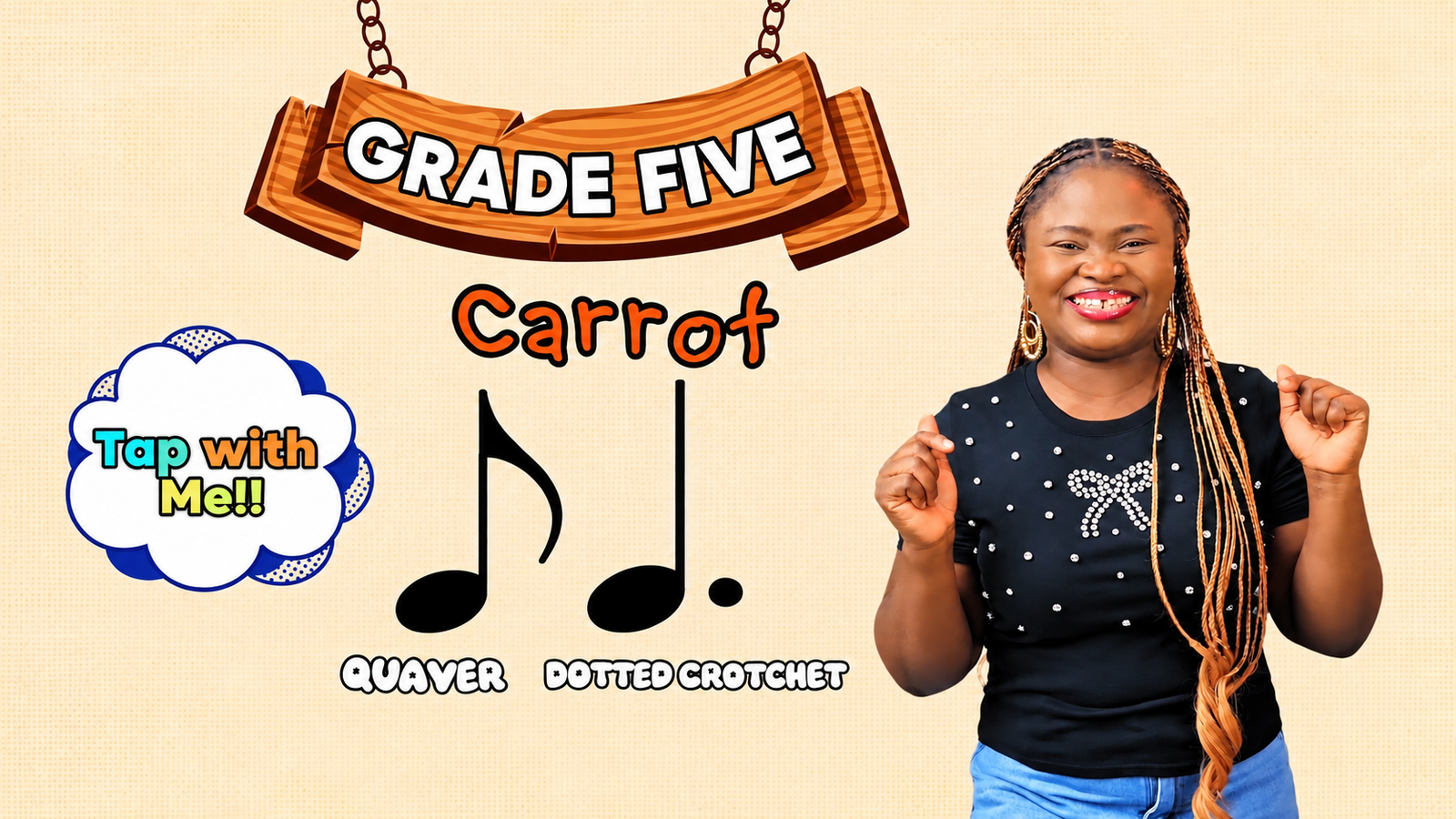
Grade 5 — Strengthening Rhythmic Fluency
At this stage, students begin applying their knowledge with greater independence. The focus shifts from simply recognising rhythms to confidently reading and performing more complex patterns.
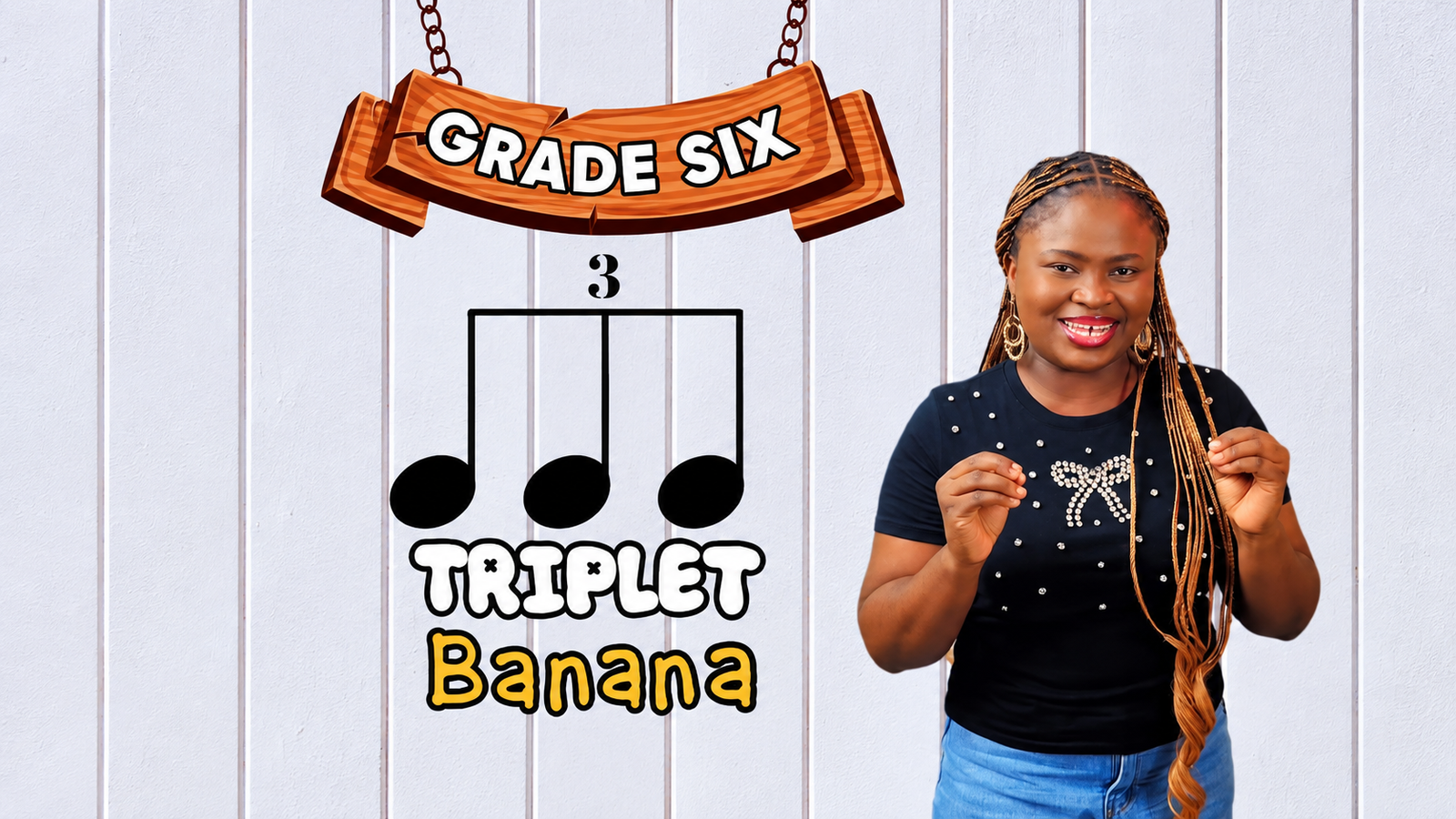
Grade 6 — Advanced Rhythmic Patterns
Students continue progressing into more challenging subdivisions and combinations. Their ability to read, count, and perform rhythms becomes more refined as they encounter increasingly complex musical structures.
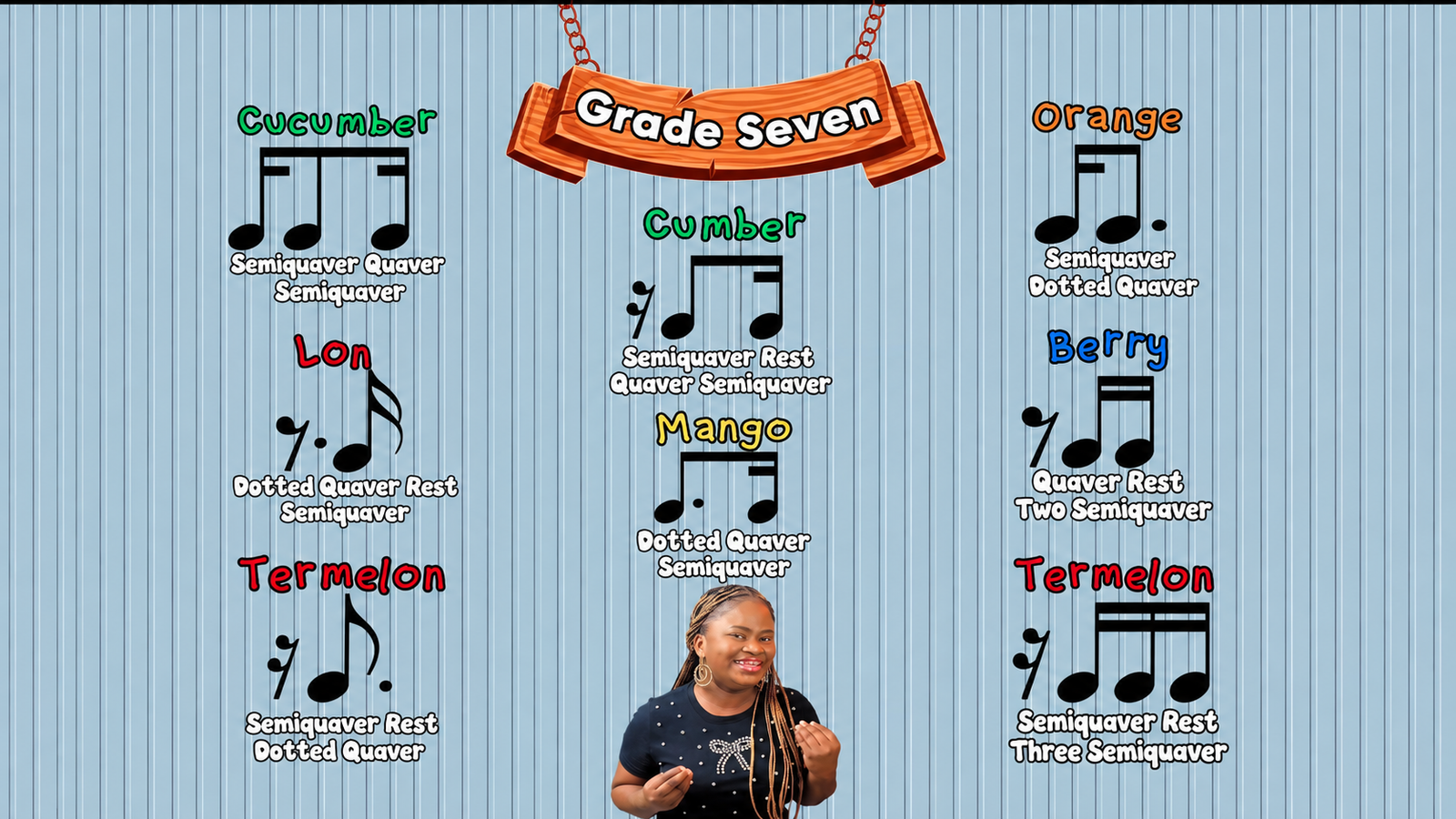
Grade 7 — Developing Advanced Accuracy
Students work with more intricate rhythmic concepts and develop greater precision. The course challenges them to maintain consistent timing while performing complex rhythmic patterns.
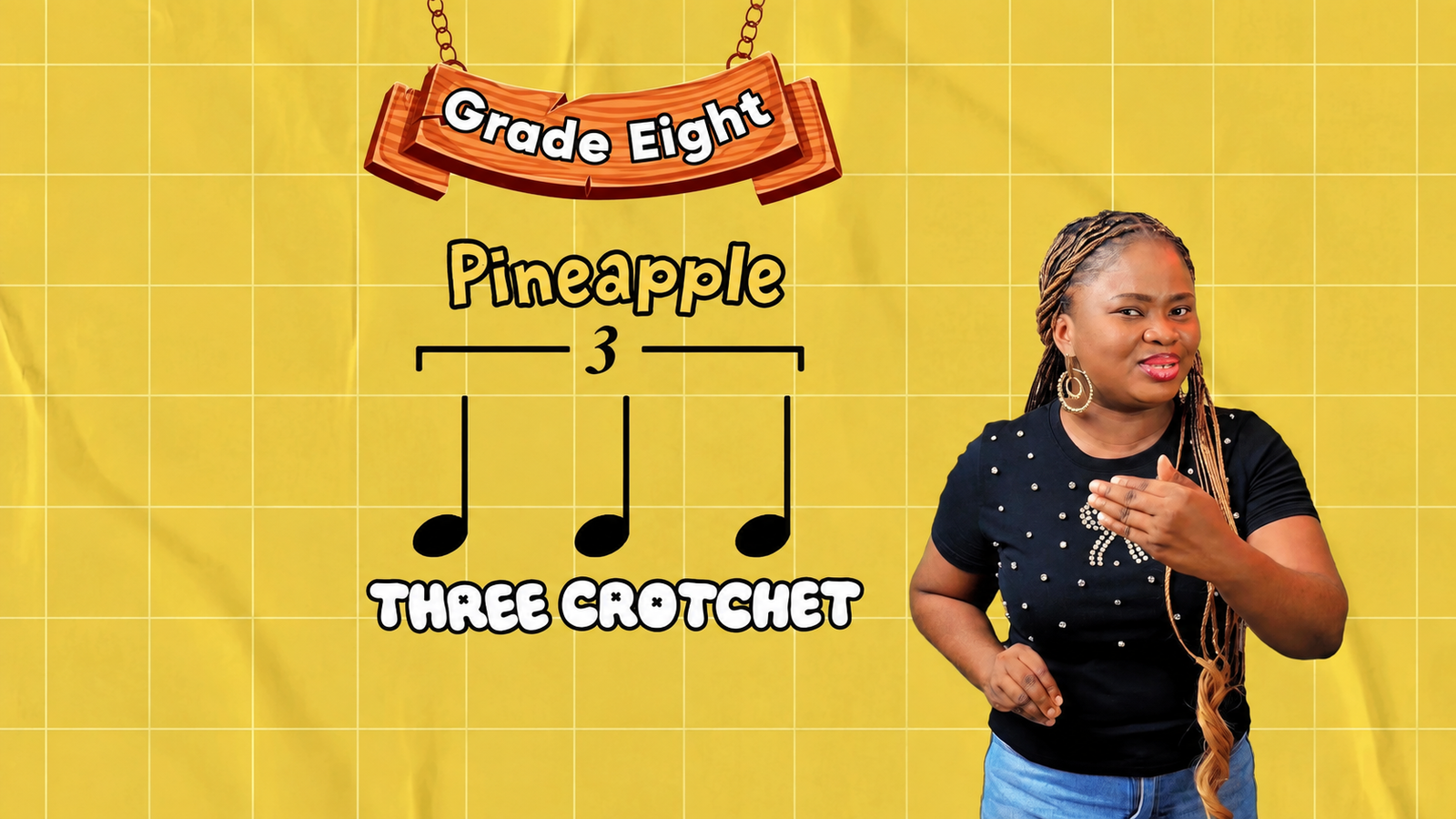
Grade 8 — Complex Rhythm Reading
Students are introduced to increasingly advanced rhythmic material, requiring stronger concentration, coordination, and rhythmic awareness. At this level, students are expected to demonstrate greater independence when reading and performing rhythms.
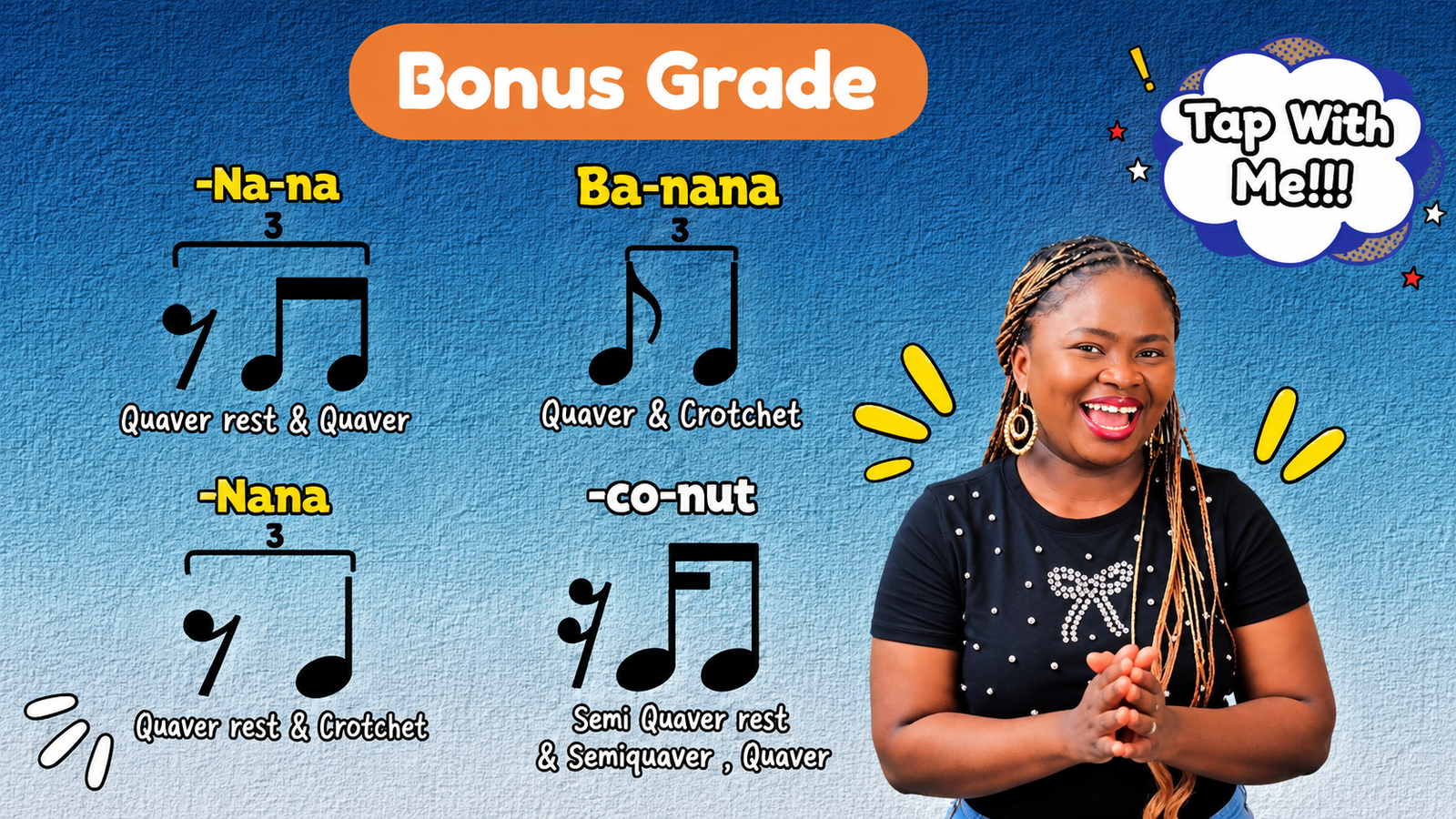
Grade 9 — Advanced Rhythmic Fluency
Students work with highly developed rhythmic patterns and concepts, including more challenging subdivisions and rhythmic combinations. The focus is on performing complex rhythms accurately and confidently.
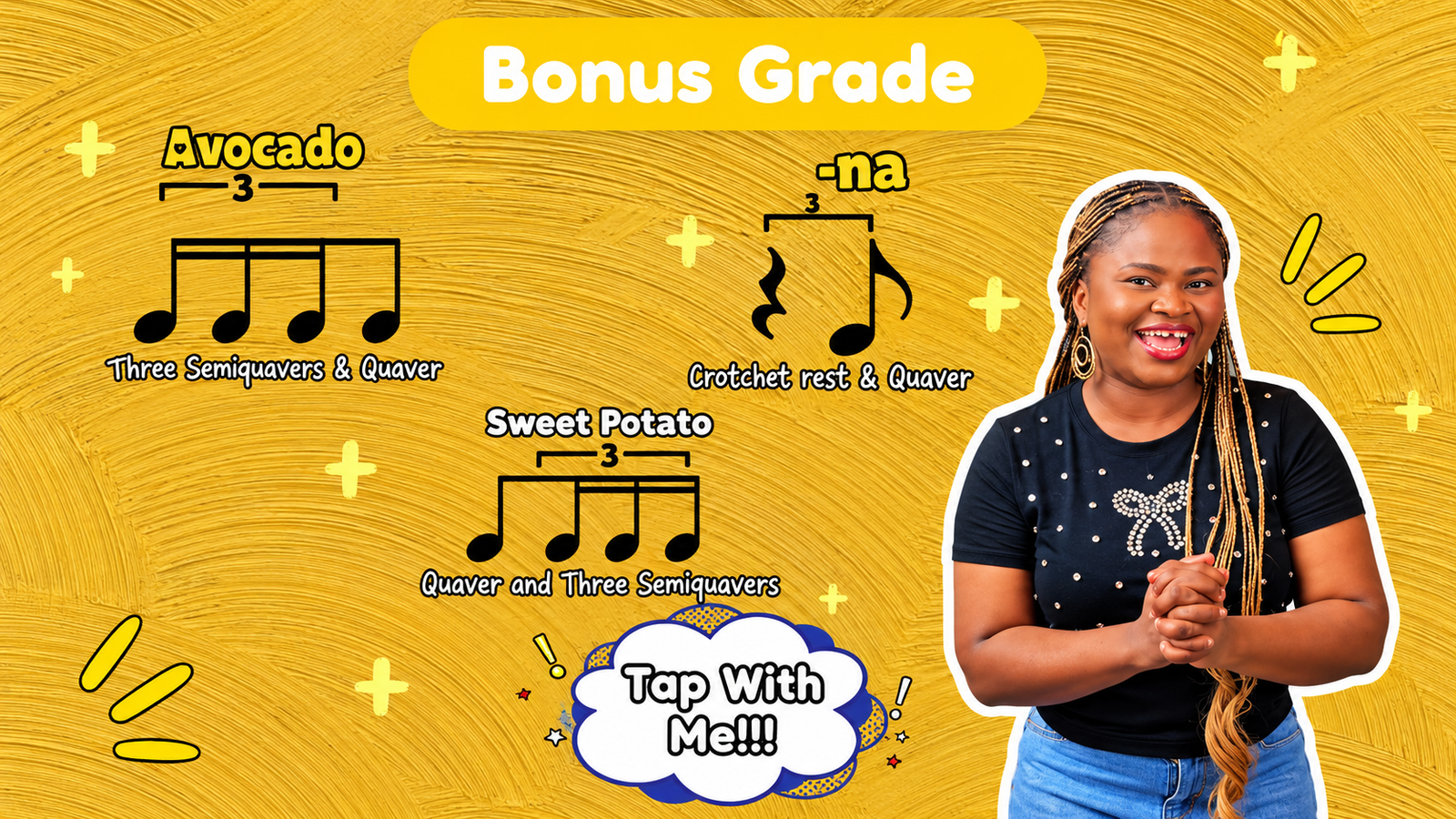
Grade 10 — Mastering Rhythmic Fluency
The final level brings together the rhythmic concepts developed throughout the course. Students work with complex rhythms, dotted notes, syncopation, triplets, faster subdivisions, and intricate rhythmic patterns, demonstrating a high level of rhythmic understanding and confidence.

Meet the Instructor
Olaoluwa Oluwatobi
Founder, Pianogoddess Academy
Pianogoddess is a professional pianist, music educator, and passionate mentor with over 10 years of experience helping students understand and enjoy music.
My passion for teaching goes beyond helping students play the piano. I am particularly passionate about helping students develop a strong understanding of rhythm, music theory, sight-reading, and practical musicianship—skills that form the foundation of confident musical performance.
Through my teaching approach, I continue to help students overcome the fear and confusion often associated with music theory and rhythm, replacing it with clarity, confidence, and practical understanding.
My goal is simple: to make music easier to understand and help every student discover that they are capable of becoming a confident musician.

Course Goal
The ultimate goal is to help students move from struggling to understand rhythm to confidently reading, counting, and performing it.
By the end of the course, students will have progressed from foundational note values to more complex rhythmic concepts, including dotted notes, syncopation, triplets, faster subdivisions, and complex rhythmic patterns.
LET'S MAKE RHYTHM CLICK!
Ready to Master Fruit Rhythm Like a Pro?
Get instant access to the full course, including the downloadable PDF.